

Solar Water Heating Systems Installed in 9 Public Hospitals


The Renewable Energy and Energy Efficiency Fund (REEEF), affiliated with the Ministry of Energy and Mineral Resources, announced Wednesday the completion of the first phase of a project to install solar water heating systems in public hospitals across the northern region. Implemented with support from the Italian Government, represented by the Italian Ministry of Environment and Energy Security, the phase concluded following the commissioning of the system at Al-Eman Public Hospital in Ajloun Governorate—the final hospital included in this stage.اضافة اعلان
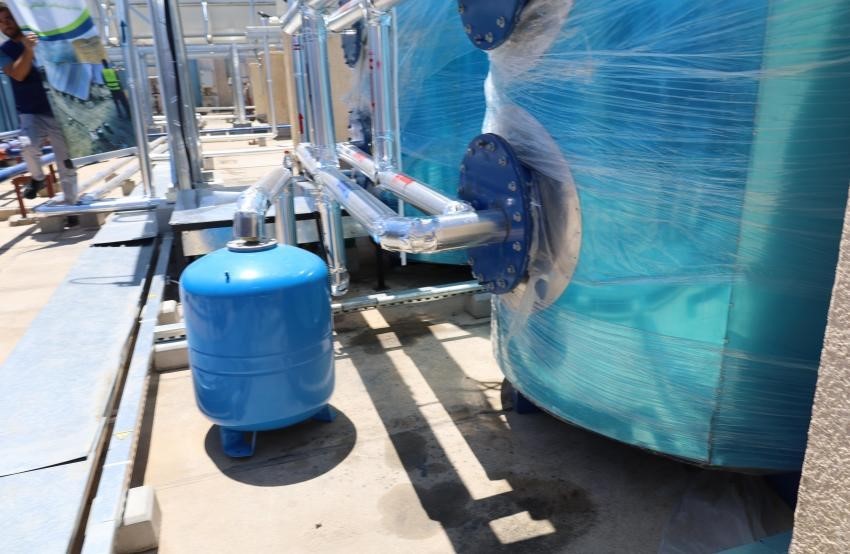
REEEF stated that with the system now operational at Al-Eman Hospital, it has completed the project's first phase, which covered nine public hospitals in northern governorates: Yarmouk Hospital, Princess Raya Hospital, Northern Badia Hospital, Mafraq Public Hospital, Princess Rahma Educational Hospital for Children, Ramtha Public Hospital, Jerash Public Hospital, and the Obstetrics and Gynecology Hospital, alongside Al-Eman Public Hospital, with a total storage capacity of 35,000 liters of hot water.
The project was executed by Noor Solar Energy in accordance with the highest technical specifications to ensure system efficiency and operational sustainability.
As part of project oversight, Rasmi Hamzeh, Executive Director of REEEF, accompanied by a technical team and representatives from the Ministry of Health and Al-Eman Hospital management, conducted a field visit to inspect the system following installation and commissioning, verifying its readiness to operate at peak efficiency and reliability.
During the visit, Hamzeh noted that the solar water heating system at Al-Eman Hospital accounts for approximately 17.1% of the first phase's total storage capacity. It is expected to produce roughly 6,000 liters of hot water daily, generating annual financial savings of around JOD 7,400 while reducing carbon emissions by approximately 24 tons of CO2 per year.
He stressed that the initiative aligns with REEEF's efforts to boost energy efficiency in the healthcare sector by providing a safe, sustainable hot water source. This reduces reliance on conventional fuel, lowers operational costs, and elevates the quality of healthcare services provided to citizens. It also exemplifies the successful partnership between the Fund and the Italian Government in delivering high-impact projects that foster energy efficiency and environmental sustainability in healthcare.
Project indicators estimate that Phase One will yield approximately 35,000 liters of hot water daily, achieving annual financial savings estimated at JOD 43,000, alongside reducing carbon emissions by roughly 140 tons of CO2 annually.
The broader project aims to install solar water heating systems across 33 public hospitals in three phases, at a total cost of JOD 3.2 million. Upon full completion, the project is projected to supply around 217,000 liters of hot water per day, generate annual financial savings of approximately JOD 266,407, and cut carbon emissions by about 866 tons of CO2 per year—aligning with the Economic Modernization Vision, the energy sector strategy, and the Kingdom's commitments under the Nationally Determined Contributions (NDCs).
REEEF stated that with the system now operational at Al-Eman Hospital, it has completed the project's first phase, which covered nine public hospitals in northern governorates: Yarmouk Hospital, Princess Raya Hospital, Northern Badia Hospital, Mafraq Public Hospital, Princess Rahma Educational Hospital for Children, Ramtha Public Hospital, Jerash Public Hospital, and the Obstetrics and Gynecology Hospital, alongside Al-Eman Public Hospital, with a total storage capacity of 35,000 liters of hot water.
The project was executed by Noor Solar Energy in accordance with the highest technical specifications to ensure system efficiency and operational sustainability.
As part of project oversight, Rasmi Hamzeh, Executive Director of REEEF, accompanied by a technical team and representatives from the Ministry of Health and Al-Eman Hospital management, conducted a field visit to inspect the system following installation and commissioning, verifying its readiness to operate at peak efficiency and reliability.
During the visit, Hamzeh noted that the solar water heating system at Al-Eman Hospital accounts for approximately 17.1% of the first phase's total storage capacity. It is expected to produce roughly 6,000 liters of hot water daily, generating annual financial savings of around JOD 7,400 while reducing carbon emissions by approximately 24 tons of CO2 per year.
He stressed that the initiative aligns with REEEF's efforts to boost energy efficiency in the healthcare sector by providing a safe, sustainable hot water source. This reduces reliance on conventional fuel, lowers operational costs, and elevates the quality of healthcare services provided to citizens. It also exemplifies the successful partnership between the Fund and the Italian Government in delivering high-impact projects that foster energy efficiency and environmental sustainability in healthcare.
Project indicators estimate that Phase One will yield approximately 35,000 liters of hot water daily, achieving annual financial savings estimated at JOD 43,000, alongside reducing carbon emissions by roughly 140 tons of CO2 annually.
The broader project aims to install solar water heating systems across 33 public hospitals in three phases, at a total cost of JOD 3.2 million. Upon full completion, the project is projected to supply around 217,000 liters of hot water per day, generate annual financial savings of approximately JOD 266,407, and cut carbon emissions by about 866 tons of CO2 per year—aligning with the Economic Modernization Vision, the energy sector strategy, and the Kingdom's commitments under the Nationally Determined Contributions (NDCs).
NEWS RELATED TO