

An Extinct Wasp Preserved in Jordanian Amber


Dr. Abbas Haddadin .A remarkable extinct wasp belonging to the family Serphitidae has been discovered preserved in Jordanian amber dating back approximately 140 million years to the Early Cretaceous period. This tiny insect represents part of the ancient biodiversity that once lived within the prehistoric forests that produced the amber deposits of Jordan.اضافة اعلان
The specimen was examined and classified by specialists at the Moscow Institute of Insects, confirming its relationship to the extinct family Serphitidae. Members of this family are known only from fossil records and are considered among the ancient parasitic wasps that inhabited Earth during the age of dinosaurs.
The fossil wasp is exceptionally important because it preserves delicate anatomical details rarely seen in fossils of such age. The amber acted as a natural protective capsule, conserving the insect in three dimensions and allowing scientific observation of body structures, wings, antennae, and leg morphology.
The two photographs of the specimen present different scientific imaging methods.
Figure 1 shows the wasp photographed under a magnifying lens.
Figure 2 shows the same specimen photographed under a microscope, revealing finer anatomical details useful for classification and scientific study.
The discovery adds further evidence that Jordanian amber contains a highly diverse fossil insect fauna, including extinct groups that disappeared millions of years ago. These findings strengthen the scientific importance of Jordanian amber as one of the oldest amber deposits preserving ancient terrestrial ecosystems.
The presence of extinct parasitic wasps in Jordanian amber provides valuable information about insect evolution and ecological interactions during the Early Cretaceous period. Such fossils help scientists better understand the diversity of prehistoric insects and the environmental conditions that existed in ancient Jordanian forests.
Jordanian amber continues to reveal rare and scientifically important fossils, contributing to global paleontological research and expanding knowledge about life on Earth 140 million years ago.
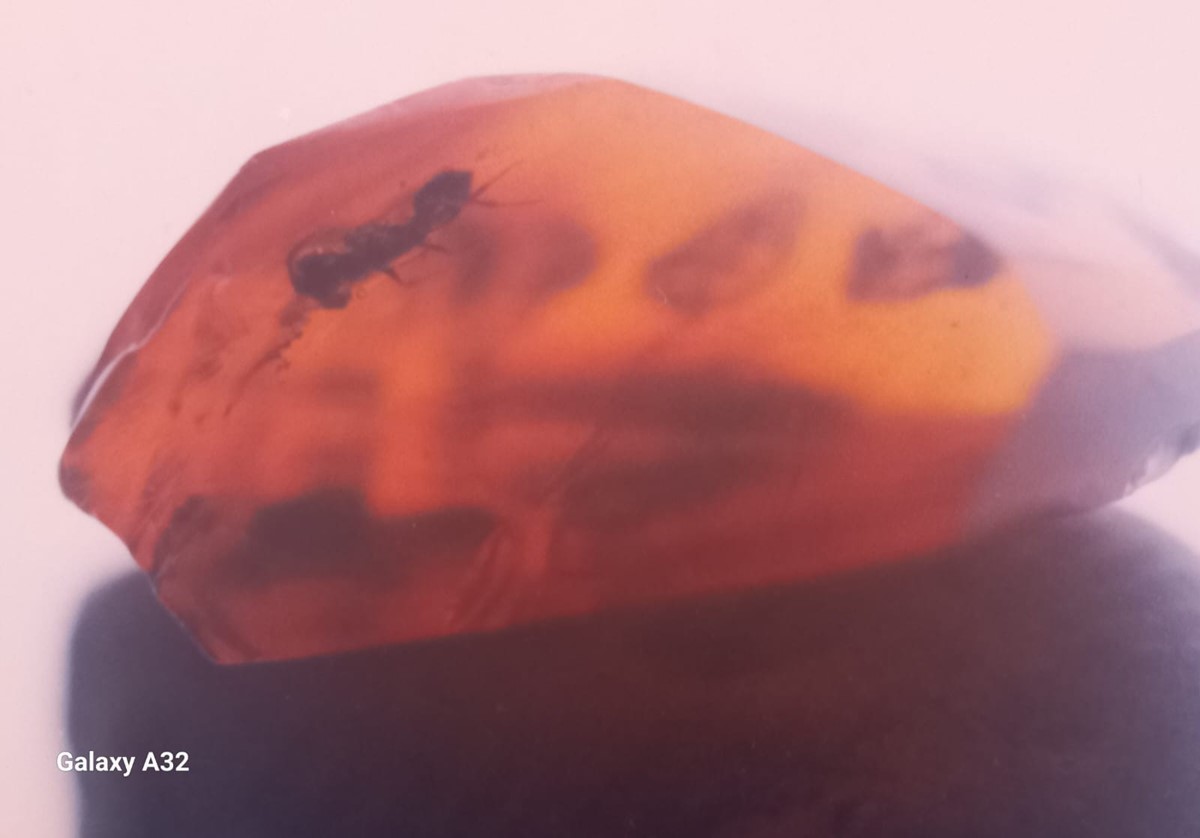
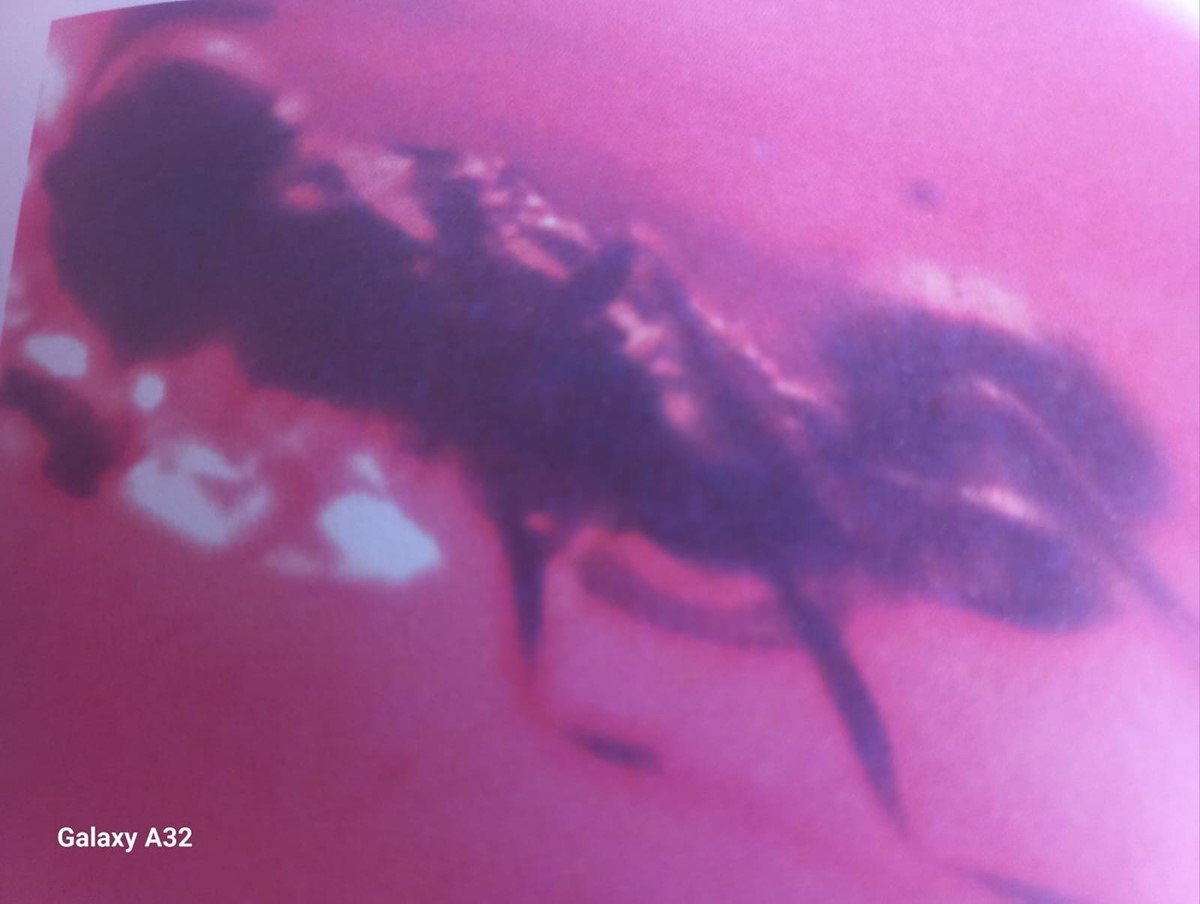
The pictures are extinct wasp (Serphitidae) preserved in Jordanian amber photographed under magnification and the same extinct wasp photographed under a microscope showing detailed morphological structures.
The specimen was examined and classified by specialists at the Moscow Institute of Insects, confirming its relationship to the extinct family Serphitidae. Members of this family are known only from fossil records and are considered among the ancient parasitic wasps that inhabited Earth during the age of dinosaurs.
The fossil wasp is exceptionally important because it preserves delicate anatomical details rarely seen in fossils of such age. The amber acted as a natural protective capsule, conserving the insect in three dimensions and allowing scientific observation of body structures, wings, antennae, and leg morphology.
The two photographs of the specimen present different scientific imaging methods.
Figure 1 shows the wasp photographed under a magnifying lens.
Figure 2 shows the same specimen photographed under a microscope, revealing finer anatomical details useful for classification and scientific study.
The discovery adds further evidence that Jordanian amber contains a highly diverse fossil insect fauna, including extinct groups that disappeared millions of years ago. These findings strengthen the scientific importance of Jordanian amber as one of the oldest amber deposits preserving ancient terrestrial ecosystems.
The presence of extinct parasitic wasps in Jordanian amber provides valuable information about insect evolution and ecological interactions during the Early Cretaceous period. Such fossils help scientists better understand the diversity of prehistoric insects and the environmental conditions that existed in ancient Jordanian forests.
Jordanian amber continues to reveal rare and scientifically important fossils, contributing to global paleontological research and expanding knowledge about life on Earth 140 million years ago.
The pictures are extinct wasp (Serphitidae) preserved in Jordanian amber photographed under magnification and the same extinct wasp photographed under a microscope showing detailed morphological structures.
NEWS RELATED TO