

Youth and Environment Ministers Launch Activities of Local Conference of Youth on Climate Change “LCOY Jordan 2026”


The Ministers of Youth and Environment today, Sunday, inaugurated the activities of the Local Conference of Youth on Climate Change “LCOY Jordan 2026,” organized by the two ministries in cooperation with Generations For Peace, the United Nations Children’s Fund (UNICEF), and the Sunflower Foundation for Environment and Development.اضافة اعلان
The two-day conference is being held at Al Hussein Youth City, with the participation of several officials and representatives of international organizations, alongside young environmental and climate activists from across the Kingdom.
Attendees included Secretary-General of the Ministry of Youth Dr. Mazen Abu Baqar, Advisor to the Minister of Youth Bassam Al-Khalayleh, Director of Al Hussein Youth City Raed Mirza, United Nations Population Fund (UNFPA) Representative Hamir Abdul Mughni, Chief Executive Officer of Generations For Peace Lama Al-Hattab, Deputy Head of Mission at the Australian Embassy in Jordan James Bryan, UNICEF Deputy Representative in Jordan Dorina Andreev Jitaru, Country Director of Plan International Jordan Hamida Jahama, and UNESCO Representative in Jordan Noha Bawazir.
The conference aims to strengthen youth participation in climate action, identify their environmental and climate priorities, and formulate practical recommendations aligned with national priorities and strategies. These recommendations will contribute to preparing the 2026 Jordanian National Youth Climate Statement ahead of the 31st Conference of the Parties (COP31).
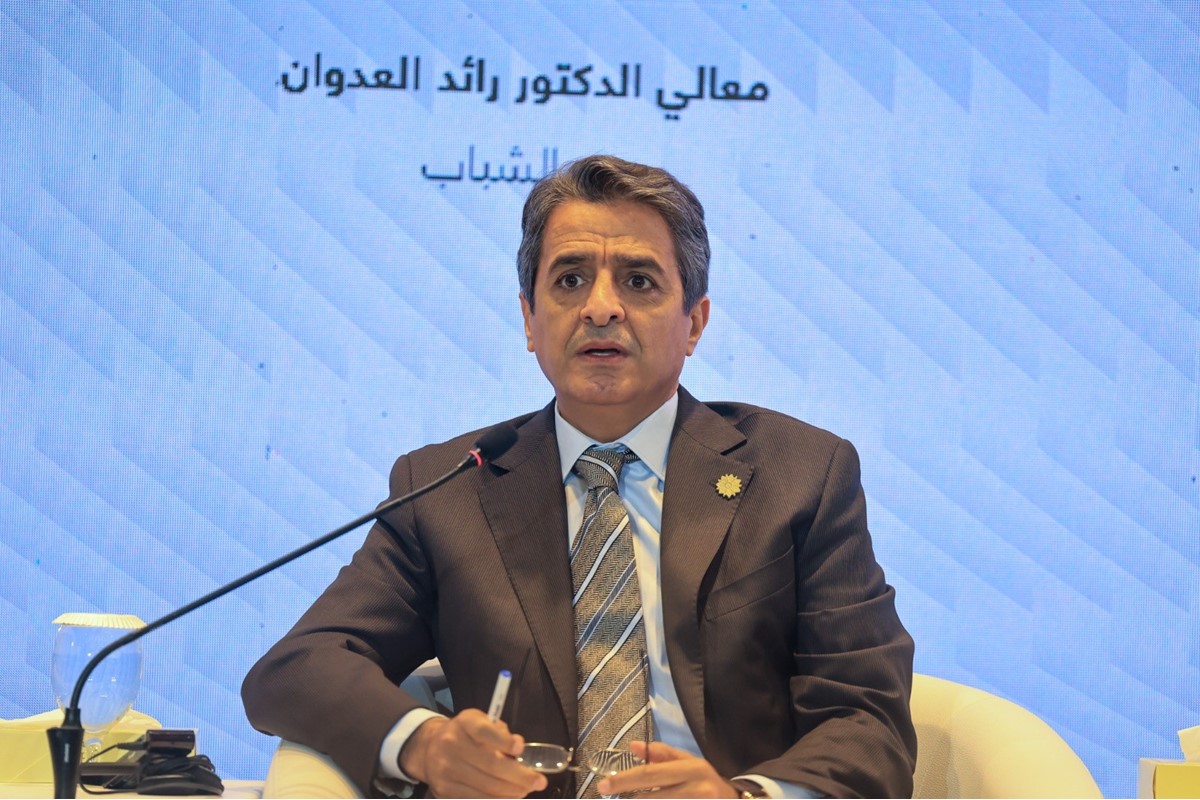
Minister of Youth Dr. Raed Sami Al-Adwan affirmed that the ministry has adopted an integrated approach to addressing environmental and climate issues through the National Youth Strategy 2026–2030, which incorporates environment and climate change as cross-cutting themes across its five pillars: active citizenship, learning and future readiness, economic empowerment, health and well-being, and sports and physical activity.
The strategy aims to equip young people to address climate challenges and benefit from emerging economic opportunities.
He added that the ministry is working to provide young people with spaces and opportunities through its centers across the governorates, enabling them to develop their ideas into practical initiatives while strengthening their planning, implementation, and partnership-building skills in cooperation with national institutions and the private sector.
Al-Adwan noted that young people can also benefit from the ministry’s centers, the Directorate of National Guidance, and its various initiatives to support environmental and climate-related projects.
He also highlighted the King Hussein bin Abdullah II Award for Voluntary Work as a national platform for promoting a culture of volunteerism and encouraging initiatives that contribute to protecting natural resources, conserving water, reducing waste, recycling, and afforestation.
For his part, the Minister of Environment highlighted the importance of investing in green skills and empowering young people to move beyond acquiring knowledge towards developing innovative solutions and viable projects.
He also outlined the Kingdom’s efforts to develop skills related to the green economy, support entrepreneurship and environmental innovation, and create new employment opportunities in sustainable sectors.
He pointed out that approximately 1,700 people have received training in skills related to green jobs, including the installation and maintenance of photovoltaic systems, heat pumps, energy efficiency, electric and hybrid vehicle maintenance, climate-smart agriculture, greywater treatment, environmental awareness, and sustainability.
Women accounted for 60% of participants in these programs, while young people represented 52%.
He added that green entrepreneurship programs included business incubators and accelerators, benefiting 278 participants through initiatives focused on developing ideas and creating viable prototypes. Meanwhile, 140 entrepreneurs received financial support, and five were recognized with awards for their contributions to environmental sustainability.
UNICEF Deputy Representative in Jordan Dorina Andreev Jitaru said climate change affects the lives of children and young people, as well as their access to water, healthcare, and education, underscoring the need to ensure their meaningful participation in shaping solutions and decisions that affect their future.
She added that UNICEF, in cooperation with the Ministry of Youth and its partners, works to equip young people with the knowledge, skills, and opportunities needed to turn their ideas into practical initiatives and ensure their priorities are considered in climate action efforts.
Meanwhile, Chief Executive Officer of Generations For Peace Lama Al-Hattab stressed that young people are essential partners in developing climate solutions and leading change within their communities.
She noted that through its “Sawn” program, the organization works to develop young people's leadership, dialogue, and teamwork skills, empowering them to turn their ideas into initiatives that they lead themselves.
Al-Hattab explained that climate change extends beyond environmental impacts to affect social cohesion and relationships within communities, particularly amid challenges related to water scarcity and natural resources.
She emphasized the importance of using peacebuilding tools to promote dialogue, cooperation, and the development of shared solutions.
In turn, UNFPA Representative in Jordan Hamir Abdul Mughni highlighted the importance of moving youth participation in climate action beyond attendance and traditional forms of engagement towards meaningful and influential involvement that translates into practical initiatives and tangible results.
He stressed the need to empower young people and provide them with opportunities to contribute to decision-making, ensuring their ideas and recommendations are translated into actions that address climate challenges and strengthen community resilience.
UNESCO Representative in Jordan Noha Bawazir affirmed that understanding climate change is different from knowing how to respond to it, highlighting the need to reconsider what young people learn, how they learn, and the environments in which they acquire knowledge.
She explained that UNESCO supports the Ministry of Education and the Ministry of Human Resource Development in implementing a whole-school approach in six schools, enabling students to apply their knowledge to real-world challenges.
For her part, Chief Executive Officer of the Sunflower Foundation for Environment and Development Malak Al-Aamer said the Local Conference of Youth on Climate Change provides a platform for empowering Jordanian youth to move beyond raising awareness of climate challenges towards actively contributing to the development of national solutions and policies.
She noted that addressing water scarcity, food security, and climate change requires involving young people as partners in decision-making and providing them with opportunities to present ideas and initiatives that respond to the Kingdom’s environmental and climate-related needs.
The conference program includes high-level panel discussions on the role of youth in national strategies and the development of skills and innovation to support the transition to a green economy.
It also features climate policy laboratories addressing water, agriculture, education, health, climate finance, climate justice, and the role of young people in peacebuilding.
Additional activities include an interactive workshop to develop youth-led initiatives, the Jordan Climate Village, and a simulation of COP31 negotiations aimed at enhancing young people's negotiation and decision-making skills.
These activities will run alongside meetings of the team responsible for drafting the National Youth Climate Statement.
The conference is scheduled to conclude with the presentation of the Jordanian National Youth Climate Statement and the launch of the National Jordanian Youth Alliance for Climate Action.
The alliance aims to strengthen coordination between youth initiatives and partners, follow up on the conference's outcomes, and support the translation of recommendations into practical initiatives and sustainable partnerships.
The conference is being held with the participation of UNICEF, Generations For Peace, UNESCO, UNFPA, and Plan International, in support of dialogue between young people and policymakers on climate policies and solutions.

The two-day conference is being held at Al Hussein Youth City, with the participation of several officials and representatives of international organizations, alongside young environmental and climate activists from across the Kingdom.
Attendees included Secretary-General of the Ministry of Youth Dr. Mazen Abu Baqar, Advisor to the Minister of Youth Bassam Al-Khalayleh, Director of Al Hussein Youth City Raed Mirza, United Nations Population Fund (UNFPA) Representative Hamir Abdul Mughni, Chief Executive Officer of Generations For Peace Lama Al-Hattab, Deputy Head of Mission at the Australian Embassy in Jordan James Bryan, UNICEF Deputy Representative in Jordan Dorina Andreev Jitaru, Country Director of Plan International Jordan Hamida Jahama, and UNESCO Representative in Jordan Noha Bawazir.
The conference aims to strengthen youth participation in climate action, identify their environmental and climate priorities, and formulate practical recommendations aligned with national priorities and strategies. These recommendations will contribute to preparing the 2026 Jordanian National Youth Climate Statement ahead of the 31st Conference of the Parties (COP31).
Minister of Youth Dr. Raed Sami Al-Adwan affirmed that the ministry has adopted an integrated approach to addressing environmental and climate issues through the National Youth Strategy 2026–2030, which incorporates environment and climate change as cross-cutting themes across its five pillars: active citizenship, learning and future readiness, economic empowerment, health and well-being, and sports and physical activity.
The strategy aims to equip young people to address climate challenges and benefit from emerging economic opportunities.
He added that the ministry is working to provide young people with spaces and opportunities through its centers across the governorates, enabling them to develop their ideas into practical initiatives while strengthening their planning, implementation, and partnership-building skills in cooperation with national institutions and the private sector.
Al-Adwan noted that young people can also benefit from the ministry’s centers, the Directorate of National Guidance, and its various initiatives to support environmental and climate-related projects.
He also highlighted the King Hussein bin Abdullah II Award for Voluntary Work as a national platform for promoting a culture of volunteerism and encouraging initiatives that contribute to protecting natural resources, conserving water, reducing waste, recycling, and afforestation.
For his part, the Minister of Environment highlighted the importance of investing in green skills and empowering young people to move beyond acquiring knowledge towards developing innovative solutions and viable projects.
He also outlined the Kingdom’s efforts to develop skills related to the green economy, support entrepreneurship and environmental innovation, and create new employment opportunities in sustainable sectors.
He pointed out that approximately 1,700 people have received training in skills related to green jobs, including the installation and maintenance of photovoltaic systems, heat pumps, energy efficiency, electric and hybrid vehicle maintenance, climate-smart agriculture, greywater treatment, environmental awareness, and sustainability.
Women accounted for 60% of participants in these programs, while young people represented 52%.
He added that green entrepreneurship programs included business incubators and accelerators, benefiting 278 participants through initiatives focused on developing ideas and creating viable prototypes. Meanwhile, 140 entrepreneurs received financial support, and five were recognized with awards for their contributions to environmental sustainability.
UNICEF Deputy Representative in Jordan Dorina Andreev Jitaru said climate change affects the lives of children and young people, as well as their access to water, healthcare, and education, underscoring the need to ensure their meaningful participation in shaping solutions and decisions that affect their future.
She added that UNICEF, in cooperation with the Ministry of Youth and its partners, works to equip young people with the knowledge, skills, and opportunities needed to turn their ideas into practical initiatives and ensure their priorities are considered in climate action efforts.
Meanwhile, Chief Executive Officer of Generations For Peace Lama Al-Hattab stressed that young people are essential partners in developing climate solutions and leading change within their communities.
She noted that through its “Sawn” program, the organization works to develop young people's leadership, dialogue, and teamwork skills, empowering them to turn their ideas into initiatives that they lead themselves.
Al-Hattab explained that climate change extends beyond environmental impacts to affect social cohesion and relationships within communities, particularly amid challenges related to water scarcity and natural resources.
She emphasized the importance of using peacebuilding tools to promote dialogue, cooperation, and the development of shared solutions.
In turn, UNFPA Representative in Jordan Hamir Abdul Mughni highlighted the importance of moving youth participation in climate action beyond attendance and traditional forms of engagement towards meaningful and influential involvement that translates into practical initiatives and tangible results.
He stressed the need to empower young people and provide them with opportunities to contribute to decision-making, ensuring their ideas and recommendations are translated into actions that address climate challenges and strengthen community resilience.
UNESCO Representative in Jordan Noha Bawazir affirmed that understanding climate change is different from knowing how to respond to it, highlighting the need to reconsider what young people learn, how they learn, and the environments in which they acquire knowledge.
She explained that UNESCO supports the Ministry of Education and the Ministry of Human Resource Development in implementing a whole-school approach in six schools, enabling students to apply their knowledge to real-world challenges.
For her part, Chief Executive Officer of the Sunflower Foundation for Environment and Development Malak Al-Aamer said the Local Conference of Youth on Climate Change provides a platform for empowering Jordanian youth to move beyond raising awareness of climate challenges towards actively contributing to the development of national solutions and policies.
She noted that addressing water scarcity, food security, and climate change requires involving young people as partners in decision-making and providing them with opportunities to present ideas and initiatives that respond to the Kingdom’s environmental and climate-related needs.
The conference program includes high-level panel discussions on the role of youth in national strategies and the development of skills and innovation to support the transition to a green economy.
It also features climate policy laboratories addressing water, agriculture, education, health, climate finance, climate justice, and the role of young people in peacebuilding.
Additional activities include an interactive workshop to develop youth-led initiatives, the Jordan Climate Village, and a simulation of COP31 negotiations aimed at enhancing young people's negotiation and decision-making skills.
These activities will run alongside meetings of the team responsible for drafting the National Youth Climate Statement.
The conference is scheduled to conclude with the presentation of the Jordanian National Youth Climate Statement and the launch of the National Jordanian Youth Alliance for Climate Action.
The alliance aims to strengthen coordination between youth initiatives and partners, follow up on the conference's outcomes, and support the translation of recommendations into practical initiatives and sustainable partnerships.
The conference is being held with the participation of UNICEF, Generations For Peace, UNESCO, UNFPA, and Plan International, in support of dialogue between young people and policymakers on climate policies and solutions.
NEWS RELATED TO