


Al-Fayez Emphasizes Importance of Preserving Water Security as an Integral Part of National Security

- +
- -


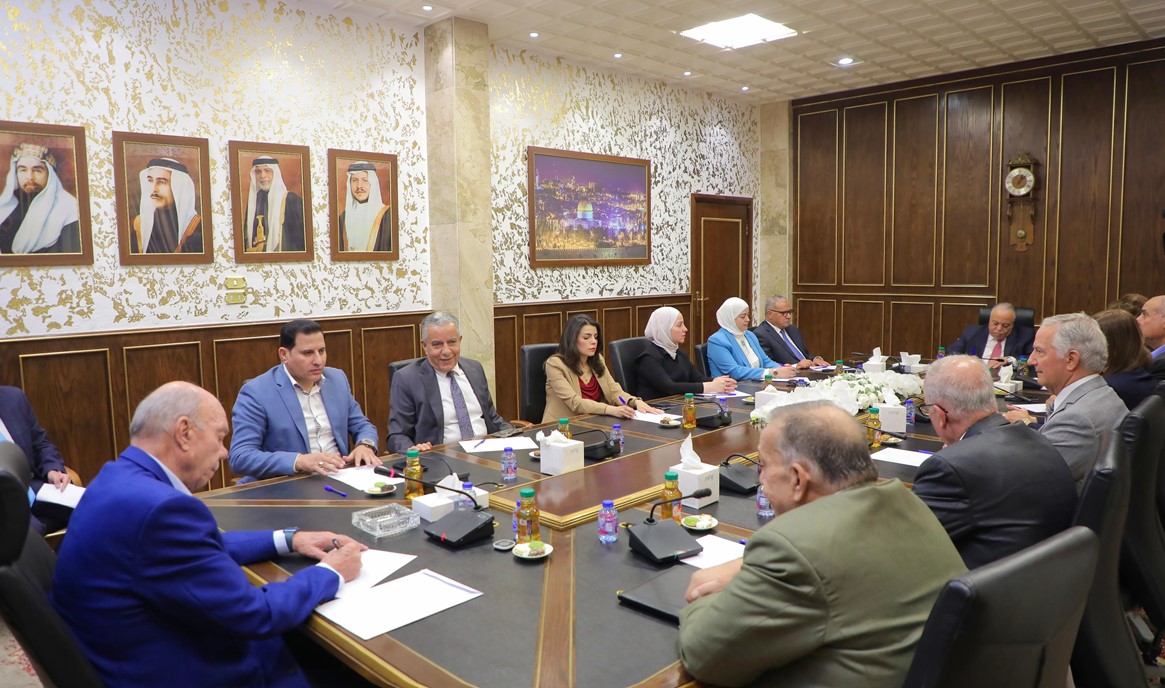
Amman – Senate President Faisal Al-Fayez emphasized the necessity of ensuring water security as an integral part of national security. He highlighted that this should be achieved through the optimal utilization of underground water at various depths, as well as surface water, large quantities of which go to waste during each winter season.اضافة اعلان
This came during a meeting today in his office at the Senate, where he received a study prepared by the Amman Group for Future Dialogues (AGFD) titled: "The Pillars of Sustainability for Jordanian Water Security: Challenges and Solutions (Diversification of Water Sources, Water Desalination, and Renewable Energy)."
Al-Fayez called for serious consideration from this moment onward to study the implementation of a new project similar to the National Conveyance Project (National Water Carrier). This project would aim to address future water scarcity challenges driven by rapid population growth and various water uses, whether through seawater desalination or the exploitation and treatment—if necessary—of deep groundwater to make it potable, as well as to bridge the deficit in water allocated for agricultural purposes.
The Senate President pointed out the importance of addressing water loss (non-revenue water), cleaning dams, expanding the construction of water harvesting ponds and earth dams, and raising awareness about the importance of water conservation and preventing waste across all sectors. At the same time, he noted the need to tackle the high cost of energy by expanding renewable energy projects (solar and wind), highlighting their positive reflections on reducing the costs of water extraction and seawater desalination.
For his part, the Chairman of the Amman Group for Future Dialogues, Bilal Al-Tal, stated that Jordan faces a complex water crisis intersected by population pressures, climate change, weak infrastructure, and high water loss, alongside regional crises that have directly impacted food and economic security.
Al-Tal explained that Jordan is considered one of the most water-scarce countries in the world, which demands an urgent transition from the phase of plans and strategies to the actual execution of sustainable projects and solutions.
The study prepared by the Amman Group indicated that water desalination represents the most critical radical solution to address water scarcity in Jordan. This could be achieved either through the National Conveyance Project to desalinate Red Sea water and transport it to Amman and other governorates, or by desalinating brackish and deep wells, alongside utilizing mobile desalination technologies.
The study stressed the necessity of expanding the use of renewable energy to operate water projects and reduce pumping and desalination costs, leveraging Jordan's massive potential in solar energy.
Over the medium term, the study recommended focusing on reducing water loss caused by leakages and illegal violations on networks, rehabilitating infrastructure, rolling out smart meters, and curbing water theft. This is in addition to expanding water harvesting, building dams, and recharging groundwater basins.
The study also highlighted the need to increase the coverage of wastewater treatment networks to utilize reclaimed water in agriculture instead of depleting fresh water resources. It emphasized the importance of rearranging water utilization priorities among sectors, pointing out that the agricultural sector consumes the largest share of water despite its lower economic return compared to industry and tourism. The paper called for adopting less water-intensive crops, improving irrigation efficiency, and enhancing the water-energy-food nexus within a comprehensive national approach that achieves sustainability and creates jobs.
Through this study, the Amman Group demanded the strengthening of water sector governance via legislative and institutional reforms, improving data and monitoring systems, and expanding partnerships with the private sector. It also called for regional and diplomatic action to protect Jordan's rights to shared waters with neighboring countries, urging not to mortgage water security by relying on politically unstable external sources.

The study concluded that the water crisis in Jordan is no longer merely a service issue, but has transformed into a national security cause that demands a comprehensive and rapid response.
This came during a meeting today in his office at the Senate, where he received a study prepared by the Amman Group for Future Dialogues (AGFD) titled: "The Pillars of Sustainability for Jordanian Water Security: Challenges and Solutions (Diversification of Water Sources, Water Desalination, and Renewable Energy)."
Al-Fayez called for serious consideration from this moment onward to study the implementation of a new project similar to the National Conveyance Project (National Water Carrier). This project would aim to address future water scarcity challenges driven by rapid population growth and various water uses, whether through seawater desalination or the exploitation and treatment—if necessary—of deep groundwater to make it potable, as well as to bridge the deficit in water allocated for agricultural purposes.
The Senate President pointed out the importance of addressing water loss (non-revenue water), cleaning dams, expanding the construction of water harvesting ponds and earth dams, and raising awareness about the importance of water conservation and preventing waste across all sectors. At the same time, he noted the need to tackle the high cost of energy by expanding renewable energy projects (solar and wind), highlighting their positive reflections on reducing the costs of water extraction and seawater desalination.
For his part, the Chairman of the Amman Group for Future Dialogues, Bilal Al-Tal, stated that Jordan faces a complex water crisis intersected by population pressures, climate change, weak infrastructure, and high water loss, alongside regional crises that have directly impacted food and economic security.
Al-Tal explained that Jordan is considered one of the most water-scarce countries in the world, which demands an urgent transition from the phase of plans and strategies to the actual execution of sustainable projects and solutions.
The study prepared by the Amman Group indicated that water desalination represents the most critical radical solution to address water scarcity in Jordan. This could be achieved either through the National Conveyance Project to desalinate Red Sea water and transport it to Amman and other governorates, or by desalinating brackish and deep wells, alongside utilizing mobile desalination technologies.
The study stressed the necessity of expanding the use of renewable energy to operate water projects and reduce pumping and desalination costs, leveraging Jordan's massive potential in solar energy.
Over the medium term, the study recommended focusing on reducing water loss caused by leakages and illegal violations on networks, rehabilitating infrastructure, rolling out smart meters, and curbing water theft. This is in addition to expanding water harvesting, building dams, and recharging groundwater basins.
The study also highlighted the need to increase the coverage of wastewater treatment networks to utilize reclaimed water in agriculture instead of depleting fresh water resources. It emphasized the importance of rearranging water utilization priorities among sectors, pointing out that the agricultural sector consumes the largest share of water despite its lower economic return compared to industry and tourism. The paper called for adopting less water-intensive crops, improving irrigation efficiency, and enhancing the water-energy-food nexus within a comprehensive national approach that achieves sustainability and creates jobs.
Through this study, the Amman Group demanded the strengthening of water sector governance via legislative and institutional reforms, improving data and monitoring systems, and expanding partnerships with the private sector. It also called for regional and diplomatic action to protect Jordan's rights to shared waters with neighboring countries, urging not to mortgage water security by relying on politically unstable external sources.
The study concluded that the water crisis in Jordan is no longer merely a service issue, but has transformed into a national security cause that demands a comprehensive and rapid response.
NEWS RELATED TO