

What Does the Repeal of the “Caesar Act” Mean for the Jordanian Economy?
Ahmad M. Awad



Over the past six years, the implementation of the U.S. “Caesar Act” has left severe social and economic impacts on Syrian society, as the sanctions went beyond their declared political objectives to affect the very fabric of Syrians’ daily lives. Despite the existence of humanitarian exemptions, these remained limited in effect, while the suffering of the Syrian people continued as a result of inflation, income collapse, and the deterioration of basic services.اضافة اعلان
The economic cost of the Caesar Act was not confined to Syria alone; its direct and indirect repercussions extended to neighboring countries, foremost among them Jordan. Jordan incurred multiple economic losses due to the disruption of one of its most important regional trade routes and the loss of a traditional market and economic partner that had long constituted a natural extension of its economy.
The enforcement of the Act led to a sharp and sustained shrinkage in transit traffic through Syrian territory, causing direct losses to Jordan’s land transport, warehousing, logistics, and customs clearance sectors. The number of transit trucks declined noticeably, operating and insurance costs increased. This negatively affected thousands of workers in the sector, drivers, companies, and those employed in supporting services, resulting in the loss of a significant share of income sources and job opportunities.
At the same time, the Jordanian economy suffered losses from the reduction of exports to the Syrian market, which had served as a natural and direct outlet for several Jordanian industries, particularly food, pharmaceutical, and consumer goods industries. This, in turn, affected production capacity, sales volumes, and the sustainability of some small and medium-sized industrial enterprises.
The Caesar Act also contributed to the suspension or delay of strategic regional projects in which Jordan was a key partner, particularly in the energy and transport sectors. The activation of regional electricity interconnection was delayed, and full utilization of the Arab Gas Pipeline was hindered, limiting Jordan’s ability to consolidate its role as a regional hub for energy and services and depriving it of promising economic and investment opportunities.
In addition, the sanctions led to higher costs for Jordanian trade with Lebanon, Turkey, and Europe after the loss of the Syrian route as the shortest and least costly land corridor. This increased transportation, time, and insurance costs, weakening the competitiveness of Jordanian exports in those markets.
In this context, the repeal of the Caesar Act opens an important economic window for Jordan to recover part of these losses. However, transforming this window into tangible gains requires immediate and well-considered action, especially in light of intense regional competition from countries that moved early to reposition their economies toward the Syrian market and are seeking to secure advanced shares in trade, services, and reconstruction phases.
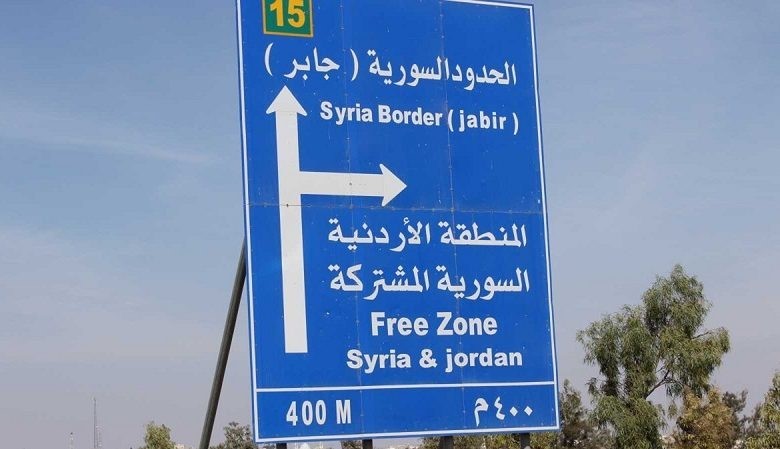
To maximize the benefits of this opportunity, coordinated Jordanian action between the government and the private sector is essential. At the governmental level, there is a need to develop a clear policy framework for the post-sanctions phase, including facilitating customs procedures, upgrading border-crossing infrastructure, providing legal and financial guarantees for economic activities related to Syria, and activating economic diplomacy to protect Jordanian interests.
As for the private sector, it is required to move quickly to rebuild trade partnerships, modernize supply chains, invest in logistics and storage services, and enhance the competitiveness of Jordanian products in terms of price and quality. Coordination among chambers of industry and commerce, banks, and transport companies will also be a decisive factor in seizing opportunities before they shift to regional competitors.
In conclusion, the repeal of the Caesar Act is not merely a political development, but a pivotal economic moment. For Jordan, success in turning this moment into a genuine developmental gain depends on the speed of response, the quality of planning, and the ability to maximize economic benefits.
The economic cost of the Caesar Act was not confined to Syria alone; its direct and indirect repercussions extended to neighboring countries, foremost among them Jordan. Jordan incurred multiple economic losses due to the disruption of one of its most important regional trade routes and the loss of a traditional market and economic partner that had long constituted a natural extension of its economy.
The enforcement of the Act led to a sharp and sustained shrinkage in transit traffic through Syrian territory, causing direct losses to Jordan’s land transport, warehousing, logistics, and customs clearance sectors. The number of transit trucks declined noticeably, operating and insurance costs increased. This negatively affected thousands of workers in the sector, drivers, companies, and those employed in supporting services, resulting in the loss of a significant share of income sources and job opportunities.
At the same time, the Jordanian economy suffered losses from the reduction of exports to the Syrian market, which had served as a natural and direct outlet for several Jordanian industries, particularly food, pharmaceutical, and consumer goods industries. This, in turn, affected production capacity, sales volumes, and the sustainability of some small and medium-sized industrial enterprises.
The Caesar Act also contributed to the suspension or delay of strategic regional projects in which Jordan was a key partner, particularly in the energy and transport sectors. The activation of regional electricity interconnection was delayed, and full utilization of the Arab Gas Pipeline was hindered, limiting Jordan’s ability to consolidate its role as a regional hub for energy and services and depriving it of promising economic and investment opportunities.
In addition, the sanctions led to higher costs for Jordanian trade with Lebanon, Turkey, and Europe after the loss of the Syrian route as the shortest and least costly land corridor. This increased transportation, time, and insurance costs, weakening the competitiveness of Jordanian exports in those markets.
In this context, the repeal of the Caesar Act opens an important economic window for Jordan to recover part of these losses. However, transforming this window into tangible gains requires immediate and well-considered action, especially in light of intense regional competition from countries that moved early to reposition their economies toward the Syrian market and are seeking to secure advanced shares in trade, services, and reconstruction phases.
To maximize the benefits of this opportunity, coordinated Jordanian action between the government and the private sector is essential. At the governmental level, there is a need to develop a clear policy framework for the post-sanctions phase, including facilitating customs procedures, upgrading border-crossing infrastructure, providing legal and financial guarantees for economic activities related to Syria, and activating economic diplomacy to protect Jordanian interests.
As for the private sector, it is required to move quickly to rebuild trade partnerships, modernize supply chains, invest in logistics and storage services, and enhance the competitiveness of Jordanian products in terms of price and quality. Coordination among chambers of industry and commerce, banks, and transport companies will also be a decisive factor in seizing opportunities before they shift to regional competitors.
In conclusion, the repeal of the Caesar Act is not merely a political development, but a pivotal economic moment. For Jordan, success in turning this moment into a genuine developmental gain depends on the speed of response, the quality of planning, and the ability to maximize economic benefits.
NEWS RELATED TO