

UNRWA-A Legal and Political Witness to a Crime That Has Not Ended
Ahmad M. Awad



The recent renewal of the mandate of the United Nations Relief and Works Agency for Palestine Refugees (UNRWA) for an additional three years by the UN General Assembly constitutes a revealing moment in the struggle over narrative, legitimacy, and international law itself. This decision, adopted by an overwhelming majority, goes far beyond being an administrative measure concerning a relief agency; at its core, it carries a renewed UN recognition that the Palestinian refugee issue remains unresolved, and that the crime upon which it was founded has not yet been closed.اضافة اعلان
UNRWA is not merely an institution that provides education, healthcare, or humanitarian assistance, despite the vital importance of this role for millions of refugees in Gaza, the West Bank, Jordan, Lebanon, and Syria. In its deeper dimension, it is a legal and political institution that preserves the collective memory of one of the largest ethnic cleansing operations in modern history, one that took place between 1946 and 1948, resulting in the uprooting of a people from their land and turning their displacement into the longest ongoing refugee case in the contemporary world.
From the moment of its establishment, the settler-colonial project in Palestine was built on the instrumentalization of biblical myths that were transformed into political tools to justify control over the land, the displacement of its indigenous population, and the establishment of a settler-colonial entity in 1948 on racist legal and institutional foundations. The state that was declared on the occupied lands at that time was built on a system of systematic racial discrimination, granting rights and privileges on ethnic and religious grounds while denying Palestinians, both within historic Palestine and in exile, their rights to land, citizenship, and return.
In this context, the very existence of UNRWA constitutes a direct challenge to the colonial narrative that has sought, and continues to seek, to erase the Nakba and reduce it to a fleeting event in history. UNRWA keeps the legal status of the Palestinian refugee alive, links humanitarian suffering to its political and legal roots, and thwarts attempts to reduce the Palestinian cause to a mere “humanitarian crisis” detached from its deep structural and historical causes.
The renewal of the mandate comes at the most dangerous phase in the Agency’s history. Over the past two years, UNRWA has faced unprecedented political, financial, and operational challenges. It has been subjected to systematic smear campaigns and direct political pressure aimed at stripping it of legitimacy, cutting its funding, and undermining its mandate, while its facilities and staff especially in the Gaza Strip, have been targeted amid a full-fledged genocide, organized starvation, and the comprehensive destruction of the civilian infrastructure.
In the West Bank, the same project continues through intensified settlement policies, land confiscation, and the imposition of coercive facts on the ground that push Palestinians toward silent displacement, using the classic tools of settler colonialism: repression, economic strangulation, and the fragmentation of spatial and social space.

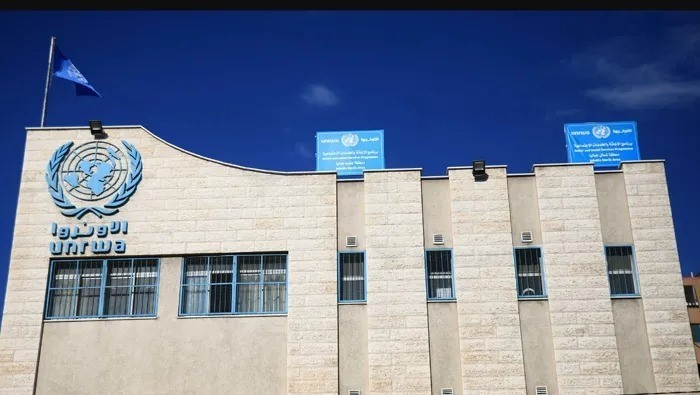
Nevertheless, the General Assembly vote reaffirmed that the majority of the world’s states still view UNRWA as a UN commitment that cannot be relinquished. At the same time, the voting map exposed a stark moral and political scandal, embodied in the positions of some states that voted against the extension or abstained. These are states that have long presented themselves as guardians of a rules-based international order, yet in this historical moment chose to stand on the side of silence or complicity.
This voting behavior cannot be considered neutral or technical; rather, it is a blatant expression of double standards and of the willingness of some states to suspend international law when it comes to Palestine. Abstaining from supporting UNRWA in a time of genocide, under the pretext of “neutrality” or “reforming UNRWA,” amounts to indirect participation in policies of displacement, mass killing, and denial of rights.
The real challenge today is not limited to renewing UNRWA’s mandate, but lies in ensuring its sustainable funding and politically and logistically enabling it to fully perform its role, free from political blackmail and attempts to subordinate it to the will of colonial powers. Funding UNRWA is not “humanitarian aid,” but a legal and moral obligation stemming from the international community’s responsibility for the original crime and its ongoing consequences.
At a moment when international law is being violated and principles are brushed aside in favor of the logic of power, UNRWA remains one of the last UN witnesses to the ongoing Nakba , to a right that has not been extinguished, and to a memory that refuses to be erased.
UNRWA is not merely an institution that provides education, healthcare, or humanitarian assistance, despite the vital importance of this role for millions of refugees in Gaza, the West Bank, Jordan, Lebanon, and Syria. In its deeper dimension, it is a legal and political institution that preserves the collective memory of one of the largest ethnic cleansing operations in modern history, one that took place between 1946 and 1948, resulting in the uprooting of a people from their land and turning their displacement into the longest ongoing refugee case in the contemporary world.
From the moment of its establishment, the settler-colonial project in Palestine was built on the instrumentalization of biblical myths that were transformed into political tools to justify control over the land, the displacement of its indigenous population, and the establishment of a settler-colonial entity in 1948 on racist legal and institutional foundations. The state that was declared on the occupied lands at that time was built on a system of systematic racial discrimination, granting rights and privileges on ethnic and religious grounds while denying Palestinians, both within historic Palestine and in exile, their rights to land, citizenship, and return.
In this context, the very existence of UNRWA constitutes a direct challenge to the colonial narrative that has sought, and continues to seek, to erase the Nakba and reduce it to a fleeting event in history. UNRWA keeps the legal status of the Palestinian refugee alive, links humanitarian suffering to its political and legal roots, and thwarts attempts to reduce the Palestinian cause to a mere “humanitarian crisis” detached from its deep structural and historical causes.
The renewal of the mandate comes at the most dangerous phase in the Agency’s history. Over the past two years, UNRWA has faced unprecedented political, financial, and operational challenges. It has been subjected to systematic smear campaigns and direct political pressure aimed at stripping it of legitimacy, cutting its funding, and undermining its mandate, while its facilities and staff especially in the Gaza Strip, have been targeted amid a full-fledged genocide, organized starvation, and the comprehensive destruction of the civilian infrastructure.
In the West Bank, the same project continues through intensified settlement policies, land confiscation, and the imposition of coercive facts on the ground that push Palestinians toward silent displacement, using the classic tools of settler colonialism: repression, economic strangulation, and the fragmentation of spatial and social space.
Nevertheless, the General Assembly vote reaffirmed that the majority of the world’s states still view UNRWA as a UN commitment that cannot be relinquished. At the same time, the voting map exposed a stark moral and political scandal, embodied in the positions of some states that voted against the extension or abstained. These are states that have long presented themselves as guardians of a rules-based international order, yet in this historical moment chose to stand on the side of silence or complicity.
This voting behavior cannot be considered neutral or technical; rather, it is a blatant expression of double standards and of the willingness of some states to suspend international law when it comes to Palestine. Abstaining from supporting UNRWA in a time of genocide, under the pretext of “neutrality” or “reforming UNRWA,” amounts to indirect participation in policies of displacement, mass killing, and denial of rights.
The real challenge today is not limited to renewing UNRWA’s mandate, but lies in ensuring its sustainable funding and politically and logistically enabling it to fully perform its role, free from political blackmail and attempts to subordinate it to the will of colonial powers. Funding UNRWA is not “humanitarian aid,” but a legal and moral obligation stemming from the international community’s responsibility for the original crime and its ongoing consequences.
At a moment when international law is being violated and principles are brushed aside in favor of the logic of power, UNRWA remains one of the last UN witnesses to the ongoing Nakba , to a right that has not been extinguished, and to a memory that refuses to be erased.
NEWS RELATED TO