

Frog Eggs Preserved in Jordanian Amber – A Rare Discovery from 140 Million Years Ago
Dr . Abbas Haddadin



The discovery of frog eggs preserved in Jordanian amber represents an exceptionally rare and scientifically significant finding, dating back approximately 140 million years to the Early Cretaceous period. Such preservation is almost unheard of, as soft and delicate biological structures like eggs are rarely fossilized, especially within amber.اضافة اعلان
The specimen from Jordan provides a unique glimpse into ancient amphibian life. Frog eggs are typically gelatinous and highly sensitive to environmental conditions, making their preservation extremely unlikely under normal circumstances.
However, the resin that later fossilized into amber created a protective microenvironment, shielding the eggs from decay and external damage over millions of years.
This discovery is particularly important because it adds a new dimension to our understanding of reproductive biology in early amphibians. While fossilized adult frogs have been documented in various parts of the world, the preservation of their eggs is exceedingly rare, making this finding a valuable contribution to palaeontology.
Amber is typically known for preserving small organisms such as insects, plant fragments, and microorganisms. The discovery of possible frog eggs expands the known diversity of biological materials trapped in resin, offering new insights into ancient ecosystems and reproductive strategies.
This highlights the uniqueness of the Jordanian specimen, both in age and in type of preservation.
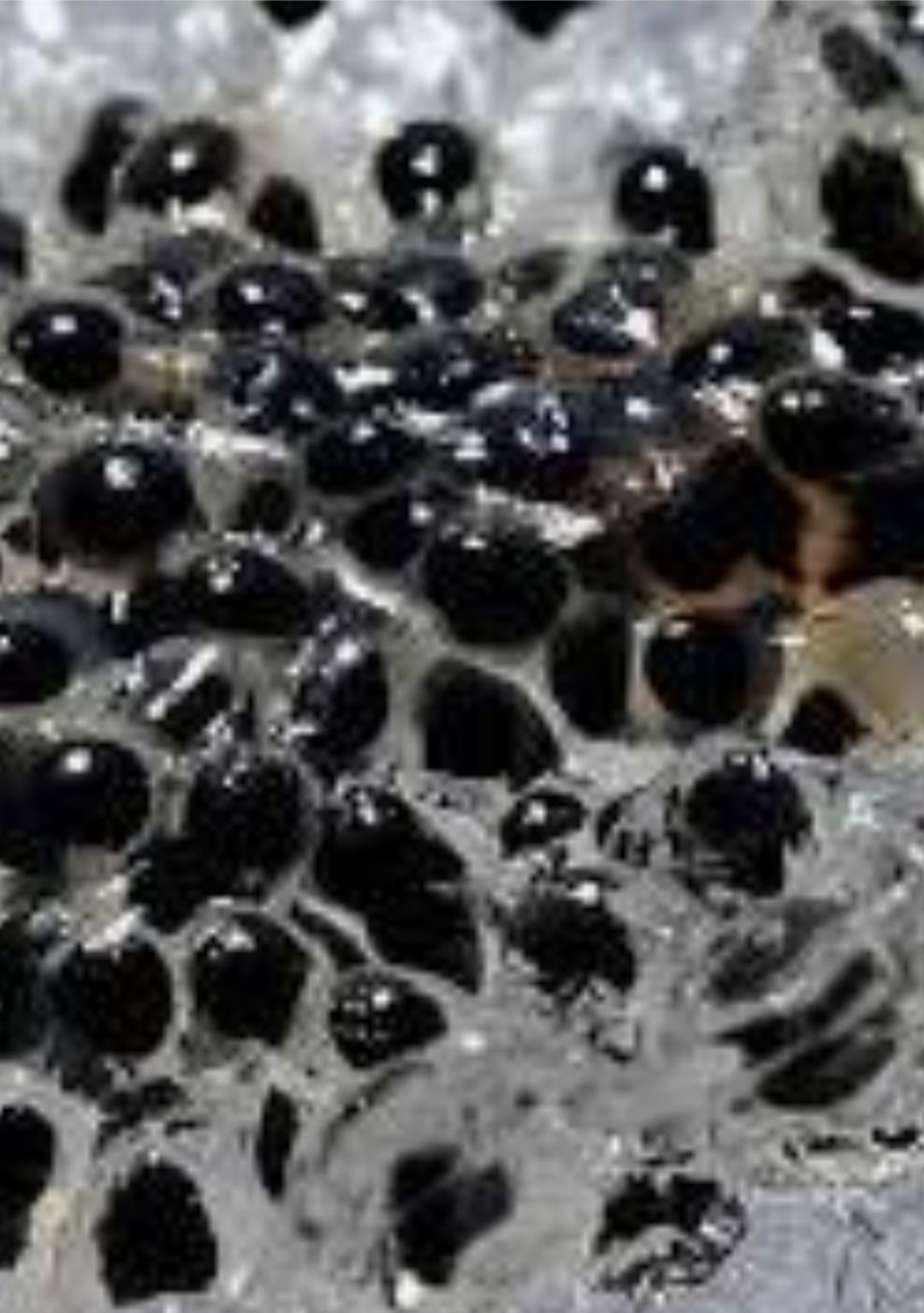
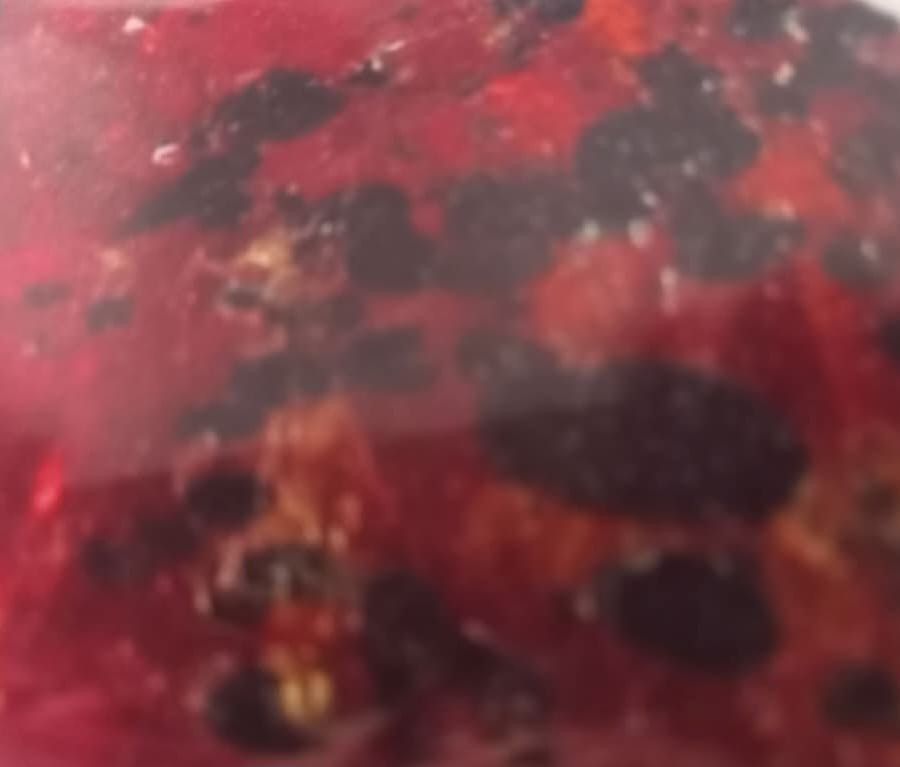
The comparison between modern frog eggs and those found in Jordanian amber reveals remarkable similarities in structure, suggesting evolutionary continuity over one hundred of millions of years. At the same time, it raises new scientific questions about the environmental conditions that allow such preservation to occur.
This discovery reinforces the global scientific importance of Jordanian amber, which continues to provide rare and valuable insights into ancient ecosystems and the early history of life on Earth.
The black picture is eggs of a modern frog, and the colored one is fossilized frog eggs preserved in Jordanian amber, approximately 140 million years old. The preservation of eggs in amber is extremely rare, making this specimen of significant scientific importance.
The specimen from Jordan provides a unique glimpse into ancient amphibian life. Frog eggs are typically gelatinous and highly sensitive to environmental conditions, making their preservation extremely unlikely under normal circumstances.
However, the resin that later fossilized into amber created a protective microenvironment, shielding the eggs from decay and external damage over millions of years.
This discovery is particularly important because it adds a new dimension to our understanding of reproductive biology in early amphibians. While fossilized adult frogs have been documented in various parts of the world, the preservation of their eggs is exceedingly rare, making this finding a valuable contribution to palaeontology.
Amber is typically known for preserving small organisms such as insects, plant fragments, and microorganisms. The discovery of possible frog eggs expands the known diversity of biological materials trapped in resin, offering new insights into ancient ecosystems and reproductive strategies.
This highlights the uniqueness of the Jordanian specimen, both in age and in type of preservation.
The comparison between modern frog eggs and those found in Jordanian amber reveals remarkable similarities in structure, suggesting evolutionary continuity over one hundred of millions of years. At the same time, it raises new scientific questions about the environmental conditions that allow such preservation to occur.
This discovery reinforces the global scientific importance of Jordanian amber, which continues to provide rare and valuable insights into ancient ecosystems and the early history of life on Earth.
The black picture is eggs of a modern frog, and the colored one is fossilized frog eggs preserved in Jordanian amber, approximately 140 million years old. The preservation of eggs in amber is extremely rare, making this specimen of significant scientific importance.
NEWS RELATED TO
Let’s Be Realistic
Apr 10,2026 | Analysis