

Jordan Interior Ministry Reviews Institutional Culture as Part of Public Sector Modernization


Interior Minister Mazen Al-Farayeh and Minister of State for Public Sector Development Badriyeh Al-Balbeisi on Monday reviewed the assessment of institutional culture at the Ministry of Interior, as part of the second phase of the Institutional Culture Assessment Project in the public sector.اضافة اعلان
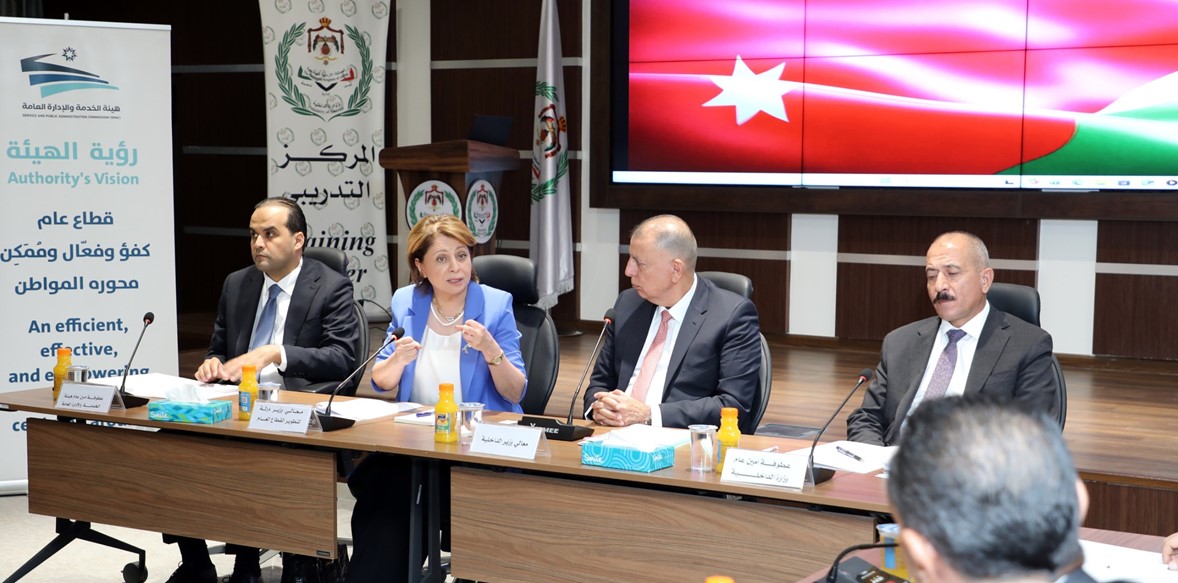
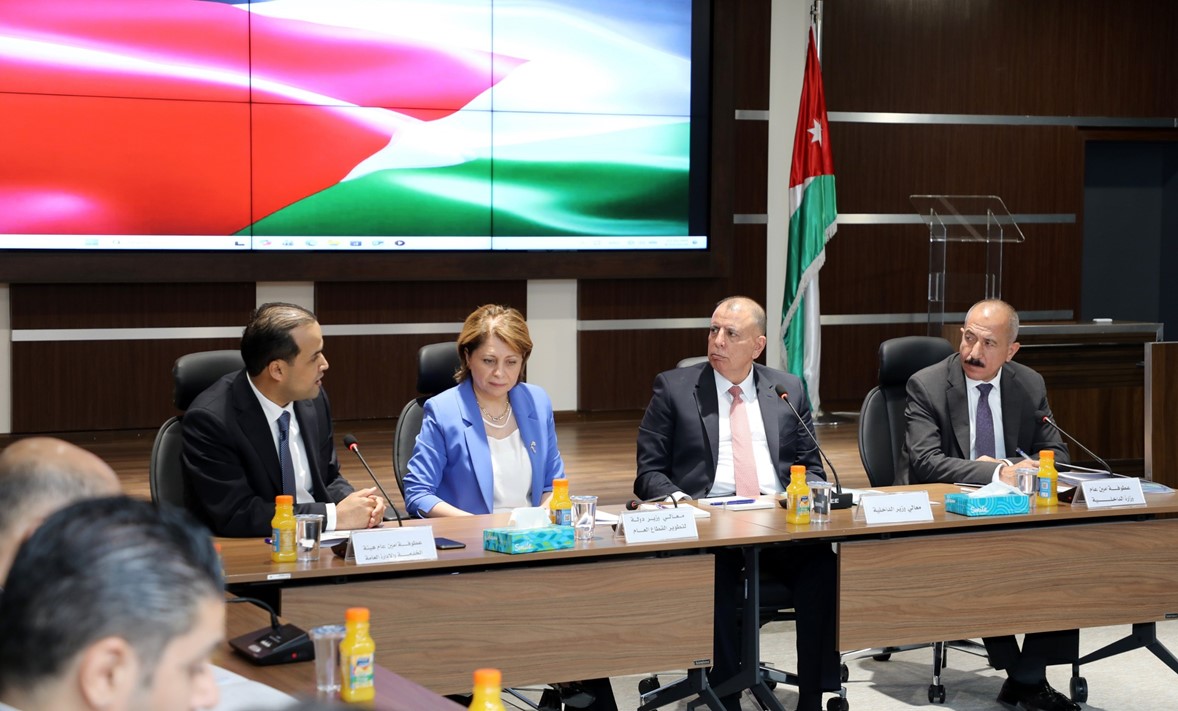
The meeting, held at the Ministry of Interior, was attended by the ministry’s Secretary-General, Khaled Abu Hamour, and directors of its departments.
Al-Farayeh stressed the importance of continuing efforts to modernize the public sector in all its components, in line with the Royal vision and alongside the political and economic modernization tracks.
He underscored the need to strengthen and develop institutional culture across the public sector, describing it as a key component of public sector modernization.
He noted its role in ensuring continuity and sustainability of work through unified procedures and an institutional methodology, rather than approaches shaped by individual employees.
Al-Farayeh said the ministry is committed to implementing the assessment requirements objectively and effectively to identify strengths and weaknesses, determine opportunities for improvement and development, and develop appropriate plans to address gaps and advance institutional culture.
For her part, Al-Balbeisi said the methodology underpinning the Institutional Culture Assessment Project aims to identify the current situation and develop improvement and development plans that contribute to enhancing performance and providing better services to citizens.
She stressed that the methodology does not seek to rank government institutions according to their performance.
Al-Balbeisi added that institutional culture is one of the components of the second Executive Program of the Public Sector Modernization Roadmap.
The component aims to change daily behavior within public institutions and translate the values and principles underpinning their work, including integrity and transparency, into practical practices that serve citizens.
She noted that one of the key outcomes of the second executive program is making the citizen the central focus of government.
This, she explained, does not apply only to service providers, but also to those responsible for developing legislation and plans, ensuring that all government work is geared toward serving citizens and providing them with the best possible services.
Al-Balbeisi also stressed the importance of having an integrated government that operates as one entity to provide services to citizens, service recipients and investors, in line with the outcomes of the Public Sector Modernization Program.
She said this principle should be reflected as a value and culture across all public institutions, from employees to senior leadership.
Ministry of Interior Secretary-General Khaled Abu Hamour reviewed the ministry’s institutional culture, highlighting its early efforts to establish and strengthen institutional culture through various tools, particularly training programs.
Meanwhile, Secretary-General of the Public Service and Administration Authority Yaser Al-Nsour said the institutional culture initiative seeks to change the approach to delivering services to citizens and strengthen positive values in the behavior and performance of public sector employees.
He noted that the first phase of the Institutional Culture Assessment Project was launched last year and covered 28 government institutions, while the second phase targets 24 institutions.
The second phase also seeks to further develop the institutional culture assessment model. The assessment process takes place over two days and includes field visits to service delivery sites, as well as meetings with department directors, section heads and a sample of employees.
The project, implemented by the Public Service and Administration Authority in cooperation with the Public Sector Modernization Program Management and Implementation Unit, aims in its second phase to assess institutional culture and behavior across 24 government institutions.
The assessment will pave the way for identifying gaps between existing practices and the desired institutional culture and developing interventions tailored to the needs of each institution.
The meeting, held at the Ministry of Interior, was attended by the ministry’s Secretary-General, Khaled Abu Hamour, and directors of its departments.
Al-Farayeh stressed the importance of continuing efforts to modernize the public sector in all its components, in line with the Royal vision and alongside the political and economic modernization tracks.
He underscored the need to strengthen and develop institutional culture across the public sector, describing it as a key component of public sector modernization.
He noted its role in ensuring continuity and sustainability of work through unified procedures and an institutional methodology, rather than approaches shaped by individual employees.
Al-Farayeh said the ministry is committed to implementing the assessment requirements objectively and effectively to identify strengths and weaknesses, determine opportunities for improvement and development, and develop appropriate plans to address gaps and advance institutional culture.
For her part, Al-Balbeisi said the methodology underpinning the Institutional Culture Assessment Project aims to identify the current situation and develop improvement and development plans that contribute to enhancing performance and providing better services to citizens.
She stressed that the methodology does not seek to rank government institutions according to their performance.
Al-Balbeisi added that institutional culture is one of the components of the second Executive Program of the Public Sector Modernization Roadmap.
The component aims to change daily behavior within public institutions and translate the values and principles underpinning their work, including integrity and transparency, into practical practices that serve citizens.
She noted that one of the key outcomes of the second executive program is making the citizen the central focus of government.
This, she explained, does not apply only to service providers, but also to those responsible for developing legislation and plans, ensuring that all government work is geared toward serving citizens and providing them with the best possible services.
Al-Balbeisi also stressed the importance of having an integrated government that operates as one entity to provide services to citizens, service recipients and investors, in line with the outcomes of the Public Sector Modernization Program.
She said this principle should be reflected as a value and culture across all public institutions, from employees to senior leadership.
Ministry of Interior Secretary-General Khaled Abu Hamour reviewed the ministry’s institutional culture, highlighting its early efforts to establish and strengthen institutional culture through various tools, particularly training programs.
Meanwhile, Secretary-General of the Public Service and Administration Authority Yaser Al-Nsour said the institutional culture initiative seeks to change the approach to delivering services to citizens and strengthen positive values in the behavior and performance of public sector employees.
He noted that the first phase of the Institutional Culture Assessment Project was launched last year and covered 28 government institutions, while the second phase targets 24 institutions.
The second phase also seeks to further develop the institutional culture assessment model. The assessment process takes place over two days and includes field visits to service delivery sites, as well as meetings with department directors, section heads and a sample of employees.
The project, implemented by the Public Service and Administration Authority in cooperation with the Public Sector Modernization Program Management and Implementation Unit, aims in its second phase to assess institutional culture and behavior across 24 government institutions.
The assessment will pave the way for identifying gaps between existing practices and the desired institutional culture and developing interventions tailored to the needs of each institution.
NEWS RELATED TO