

Jordanian Amber: A Time Capsule Revealing the Secrets of Life 140 Million Years Ago
Dr . Abbas Haddadin



Jordanian amber provides a remarkable window into life on Earth approximately 140 million years ago. Preserved within this ancient resin are traces of organisms that lived in a world very different from the one we know today. These specimens offer valuable opportunities to investigate ancient insects, plants, and the ecological relationships that existed in the Early Cretaceous.اضافة اعلان
My research into Jordanian amber began with field discoveries in 1960 in the Jerash–Wadi Zarqa region of Jordan. Over the decades, I have continued to collect, examine, document, and photograph specimens, seeking to understand the biological history preserved within them.
The amber-bearing deposits of Jordan preserve evidence of an ancient terrestrial environment. Research on the region's geology and fossil plants, including work undertaken with the geologist Klaus Bandel, has helped provide a framework for understanding this ancient landscape.
The fossil record points to a plant-rich environment that included ferns and other ancient vegetation, alongside gymnosperms related to important groups of conifers. Such plants formed part of the landscape in which insects and other organisms lived.
Amber is particularly valuable because it can preserve delicate biological structures that are rarely retained in ordinary sedimentary fossils. Inclusions may reveal details of insect bodies, wings, legs, antennae, and other features needed for scientific investigation.
One of the most important aspects of Jordanian amber is its insect inclusions. Through years of examination, I have documented numerous specimens representing different forms of ancient insect life.
Some inclusions may belong to extinct groups, while others may be related to lineages that survived into the present day. Careful identification requires detailed morphological examination and comparison with published scientific descriptions and specimens studied by specialists.
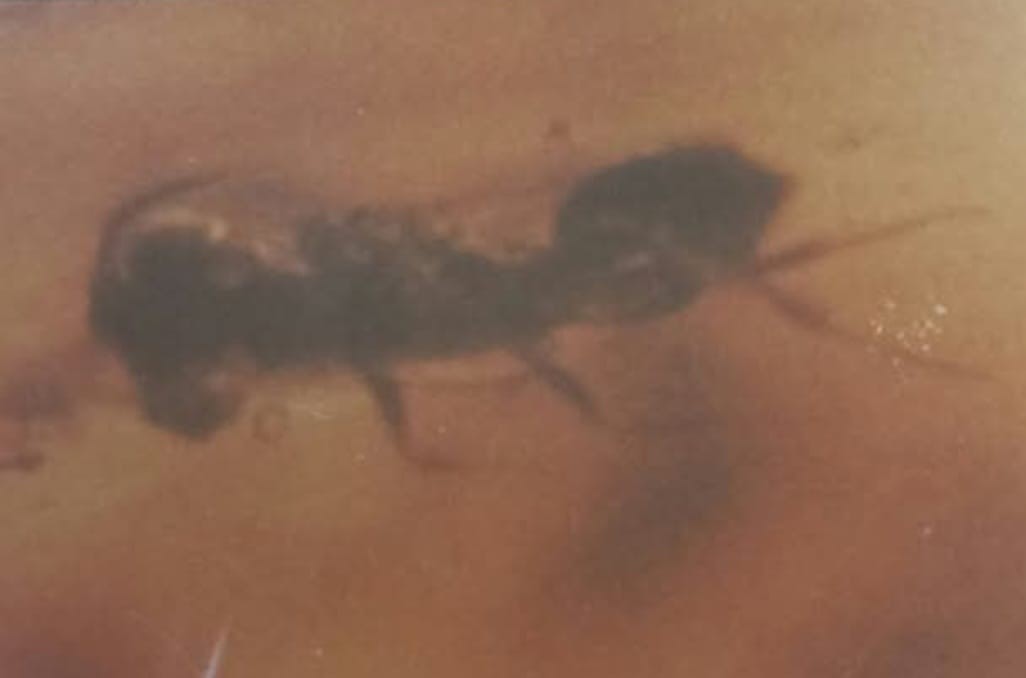
Among the specimens of particular interest is a wasp assigned to the family Serphitidae. This group is associated with the ancient insect fauna of the Cretaceous. Its study offers an opportunity to investigate the diversity and evolutionary history of early wasps. Its precise evolutionary relationships must be established through specialist taxonomic research rather than assumed from its age alone.
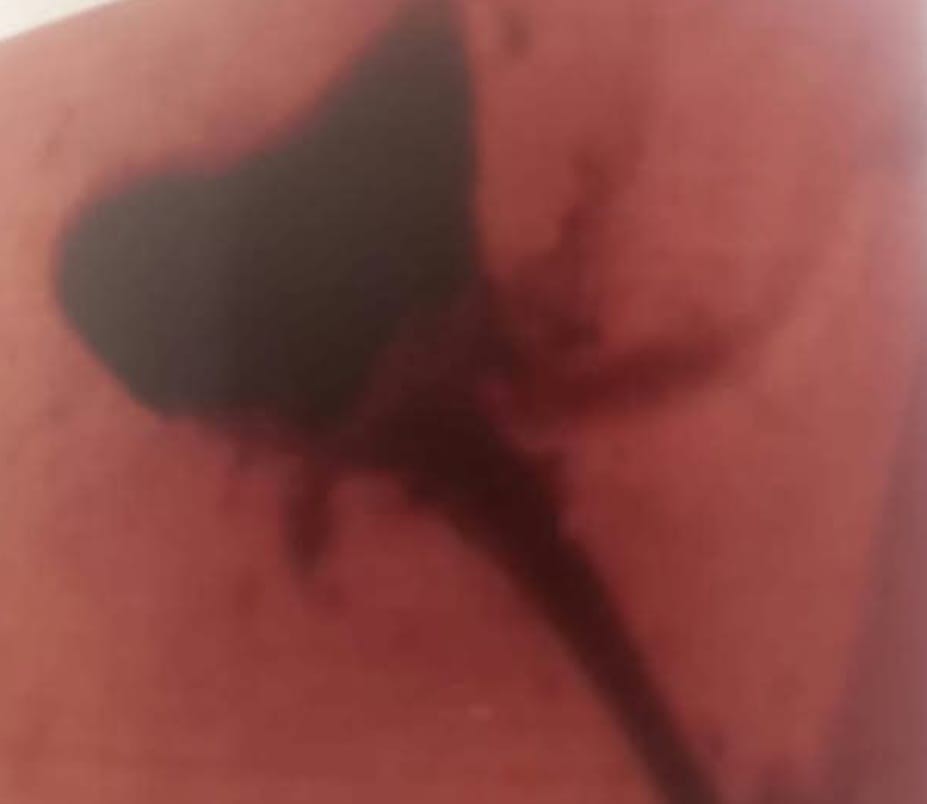
Jordanian amber also offers evidence of ancient plant life. My collection includes specimens interpreted as flowers, leaves, seeds, and other plant remains. These inclusions are important because they may preserve reproductive structures and other details that help researchers investigate the diversity of ancient plants.
The examination of small structures, including flower parts and pollen-bearing material, requires careful preparation, magnification, and photography. Comparisons with modern plants and other amber deposits may help clarify the identity and significance of these specimens.
Each specimen must be studied individually. Similarities in appearance can provide useful clues, but reliable identification depends on visible diagnostic features and comparison with appropriate scientific references.
My work on Jordanian amber has involved extensive field observations, the collection and preparation of specimens, photographic documentation, and the study of scientific literature. I have also shared images and observations with specialists in fossil insects and other fields to support further examination.
The value of this collection lies not only in the amber itself, but also in the scientific information associated with each specimen: its geological context, its preserved structures, and the observations made during its study.
Jordanian amber deserves continued attention from researchers, universities, and natural-history museums. Further investigation using suitable stereomicroscopes, digital imaging, and collaboration among specialists could help reveal additional details that are difficult to observe with basic equipment.
Amber is more than a beautiful fossil material. It is a record of ancient ecosystems, preserving evidence of organisms and biological interactions from deep geological time.
The Jordanian specimens provide an opportunity to expand our understanding of the region's ancient biodiversity and its place in the history of life. Their scientific importance makes careful documentation, responsible study, and the preservation of the collection essential.
After decades of research, I believe that Jordanian amber still holds many secrets waiting to be investigated. Each specimen offers another opportunity to learn about the ancient world and to preserve an important part of Jordan's geological and natural heritage.
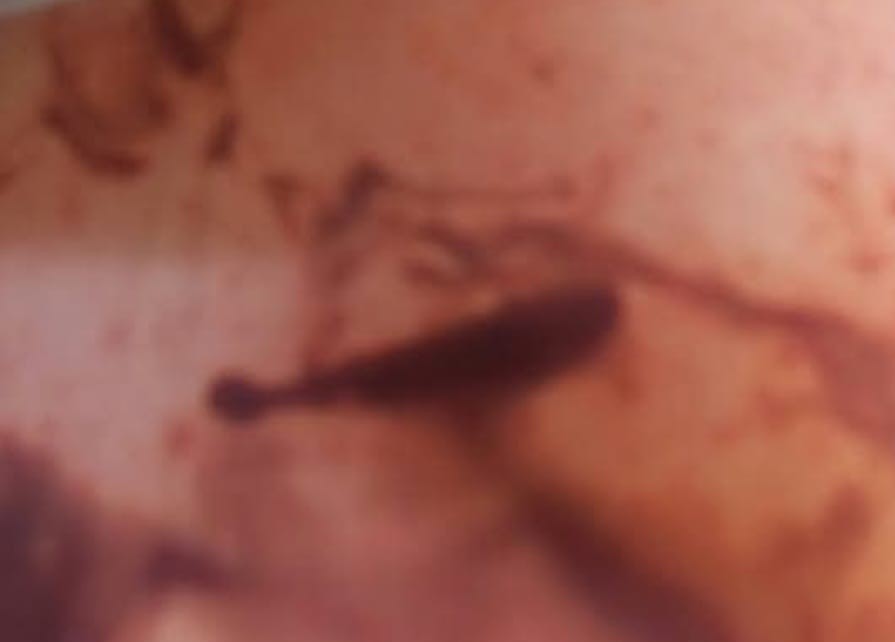
The first picture is Serphitidea spider, the second one is a flower in Jordan Amber and the third picture is a seed of agaith, all of them are 140 million years old.
My research into Jordanian amber began with field discoveries in 1960 in the Jerash–Wadi Zarqa region of Jordan. Over the decades, I have continued to collect, examine, document, and photograph specimens, seeking to understand the biological history preserved within them.
The amber-bearing deposits of Jordan preserve evidence of an ancient terrestrial environment. Research on the region's geology and fossil plants, including work undertaken with the geologist Klaus Bandel, has helped provide a framework for understanding this ancient landscape.
The fossil record points to a plant-rich environment that included ferns and other ancient vegetation, alongside gymnosperms related to important groups of conifers. Such plants formed part of the landscape in which insects and other organisms lived.
Amber is particularly valuable because it can preserve delicate biological structures that are rarely retained in ordinary sedimentary fossils. Inclusions may reveal details of insect bodies, wings, legs, antennae, and other features needed for scientific investigation.
One of the most important aspects of Jordanian amber is its insect inclusions. Through years of examination, I have documented numerous specimens representing different forms of ancient insect life.
Some inclusions may belong to extinct groups, while others may be related to lineages that survived into the present day. Careful identification requires detailed morphological examination and comparison with published scientific descriptions and specimens studied by specialists.
Among the specimens of particular interest is a wasp assigned to the family Serphitidae. This group is associated with the ancient insect fauna of the Cretaceous. Its study offers an opportunity to investigate the diversity and evolutionary history of early wasps. Its precise evolutionary relationships must be established through specialist taxonomic research rather than assumed from its age alone.
Jordanian amber also offers evidence of ancient plant life. My collection includes specimens interpreted as flowers, leaves, seeds, and other plant remains. These inclusions are important because they may preserve reproductive structures and other details that help researchers investigate the diversity of ancient plants.
The examination of small structures, including flower parts and pollen-bearing material, requires careful preparation, magnification, and photography. Comparisons with modern plants and other amber deposits may help clarify the identity and significance of these specimens.
Each specimen must be studied individually. Similarities in appearance can provide useful clues, but reliable identification depends on visible diagnostic features and comparison with appropriate scientific references.
My work on Jordanian amber has involved extensive field observations, the collection and preparation of specimens, photographic documentation, and the study of scientific literature. I have also shared images and observations with specialists in fossil insects and other fields to support further examination.
The value of this collection lies not only in the amber itself, but also in the scientific information associated with each specimen: its geological context, its preserved structures, and the observations made during its study.
Jordanian amber deserves continued attention from researchers, universities, and natural-history museums. Further investigation using suitable stereomicroscopes, digital imaging, and collaboration among specialists could help reveal additional details that are difficult to observe with basic equipment.
Amber is more than a beautiful fossil material. It is a record of ancient ecosystems, preserving evidence of organisms and biological interactions from deep geological time.
The Jordanian specimens provide an opportunity to expand our understanding of the region's ancient biodiversity and its place in the history of life. Their scientific importance makes careful documentation, responsible study, and the preservation of the collection essential.
After decades of research, I believe that Jordanian amber still holds many secrets waiting to be investigated. Each specimen offers another opportunity to learn about the ancient world and to preserve an important part of Jordan's geological and natural heritage.
The first picture is Serphitidea spider, the second one is a flower in Jordan Amber and the third picture is a seed of agaith, all of them are 140 million years old.
NEWS RELATED TO