

The Structure of Jordan’s Ancient Forest 140 Million Years Ago: Evidence Preserved in Amber
Dr . Abbas Haddadin



Around 140 million years ago, the region of present-day Jordan supported ancient vegetation that provides important clues about the natural environment of the Early Cretaceous.
Jordanian amber is especially valuable because it preserves biological remains and offers a window into the life of the ancient forest.
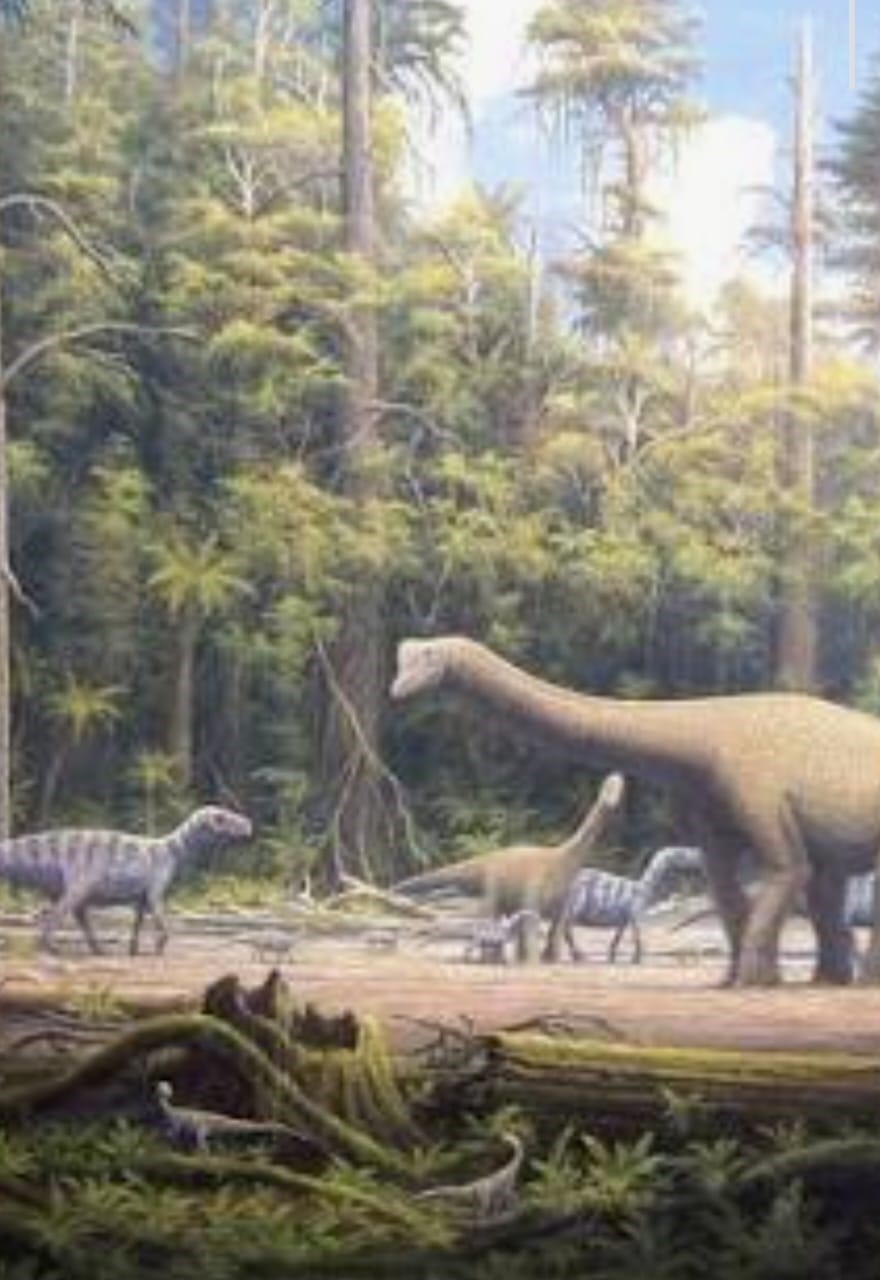
My long-term study of Jordanian amber and plant remains has led me to examine the biological structure of this ancient forest, including its flowers, leaves, branches, stems, pollen, and other plant structures.
A Forest Composed of Different Plants. The ancient Jordanian forest was not necessarily composed of a single type of tree. Evidence from fossil plants and previous geological studies points to a diverse vegetation community.
Its components included Weichselia, an extinct tree fern, other ferns, cycads, and conifers related to the family Araucariaceae, including Agathis. These plants represent different forms of vegetation that contributed to the structure of the ancient landscape.
The presence of different plant groups suggests that the forest contained vegetation with varied growth forms, from ferns to larger woody plants. Their distribution would have influenced the availability of light, growing space, and resources within the ecosystem.
My examination of Jordanian amber has documented several types of plant remains and structures that deserve further scientific study. The material examined includes:
* Ten different types of flowers.
* Eight leaf specimens.
* Four branches.
* Three stems preserved outside amber.
* Pollen grains and a pollen-bearing layer associated with plant material.
* Four types of seeds that still require further examination.
These observations form part of an ongoing investigation into the diversity and biological organization of the ancient vegetation. The identification and relationships of individual specimens require careful comparison and, where necessary, confirmation by specialists.
Flowers and pollen provide important clues about plant reproduction. Their preservation in association with amber makes it possible to investigate aspects of the ancient relationship between plants and insects.
Amber can preserve delicate biological details that may otherwise disappear during fossilization. By examining these structures under suitable magnification, researchers can investigate the form of flowers, the organization of pollen-bearing parts, and possible evidence of interactions between plants and insects.
The presence of different flower types raises important questions about the diversity of reproductive strategies in the ancient ecosystem. However, the exact relationships between particular flowers and insects must be established from the preserved evidence rather than assumed.
A forest containing ferns, cycads, and conifers would have offered different habitats and growing conditions. Taller plants could have shaded lower vegetation, while climbing plants, where present, could have used other plants for support. Differences in plant height and growth form would have influenced competition for sunlight and space.
Conifers also produced resin, some of which hardened and became amber. When resin trapped insects or other small organisms, it could preserve them for millions of years. The resulting inclusions now provide a valuable record for studying ancient biodiversity.
The forest should therefore be understood as a biological community in which plants occupied different ecological positions and interacted with their surroundings.
The study of Jordanian amber requires detailed photography, microscopic examination, comparison with previously described fossils, and collaboration among specialists in palaeobotany, entomology, and geology.
Improved scientific equipment would help document the fine structures of the specimens, especially the small reproductive structures and insects that cannot be adequately characterized with a simple magnifying microscope.
The remaining unidentified samples may contain additional evidence that could expand our understanding of the ancient forest and its organisms.
Jordanian amber and associated fossil plant remains offer an important opportunity to investigate the biological structure of an ancient forest. The documented flowers, leaves, branches, stems, and pollen provide a starting point for understanding its plant diversity and possible ecological relationships.
After decades of research into Jordanian amber, I believe that systematic examination of these specimens, supported by modern imaging and international scientific cooperation, can reveal further details about the ancient natural environment of Jordan.
The picture shows the structure of Jordan’s Ancient Forest 140 Million Years Ago.
NEWS RELATED TO
Made in Ayla
Oct 11,2026 | Analysis