

Feynan Stone: Jordan’s Green Treasure — Malachite from the Ancient Copper District
Dr . Abbas Haddadin



Jordan is home to some of the most remarkable geological and archaeological landscapes in the world. Among them is the ancient copper-producing region of Feynan, in southern Jordan, where copper minerals have been known and worked since antiquity.اضافة اعلان
One of the most visually striking minerals associated with the copper deposits of Feynan is malachite, a beautiful green copper carbonate mineral. Its chemical formula is Cu₂CO₃(OH)₂, and its characteristic green color has made it one of the most recognizable copper minerals.
The malachite found in the Feynan region is closely associated with the area's ancient copper deposits. Its green color results from the presence of copper and from the mineral's chemical structure.
For centuries, people have been fascinated by malachite because of its distinctive color and patterns. When polished, the mineral can display beautiful shades of green ranging from light green to deep green, sometimes forming concentric bands and other natural patterns.
This makes Feynan malachite not only a geological specimen but also a material of cultural and historical interest.
Feynan is one of the most important ancient copper-mining regions in the southern Levant. Evidence of ancient mining and copper production demonstrates the importance of the area to early human societies.
The landscape of Feynan preserves a remarkable connection between geology and human history. The copper-bearing rocks provided the raw material, while ancient communities developed methods for extracting and processing copper.
Malachite is particularly interesting in this context because it is itself a copper mineral and can occur as an oxidation product in copper deposits.
It has a long history of human use. Ancient civilizations valued the mineral for its striking green color. In ancient Egypt, powdered green minerals, including malachite, were used in cosmetic and decorative applications.
Its intense color also made malachite attractive as a pigment and ornamental material.
The history of malachite therefore extends beyond mineralogy. It represents an intersection between geology, archaeology, art, and ancient technology.
The Feynan region demonstrates how a geological resource can become part of the cultural history of a country. The copper minerals of the region are evidence of geological processes, while the ancient mines and smelting remains provide evidence of human activity over thousands of years.
For this reason, Feynan malachite deserves attention not only as a mineral specimen but also as part of Jordan's geological heritage.
The specimen documented in this article represents one example of the remarkable mineral wealth preserved in Jordan. Its green color immediately identifies it as a member of the malachite family, while its association with the ancient copper district of Feynan gives it additional scientific and historical significance.
My research over many years has focused on documenting Jordan's natural history and geological heritage. I believe that minerals, fossils, rocks, and other geological specimens should be documented carefully because each specimen can provide information about the geological history of the region.
Feynan is particularly important because it brings together geology and human history in one landscape: copper-bearing rocks, ancient mines, archaeological remains, and minerals such as malachite.
The study and documentation of these materials can help future generations understand the natural resources that shaped the history of Jordan.
Feynan's green malachite is therefore more than a beautiful stone. It is a piece of Jordan's geological story and a reminder of the long relationship between the people of this land and its mineral resources.
The pucture is Feynan Stone.
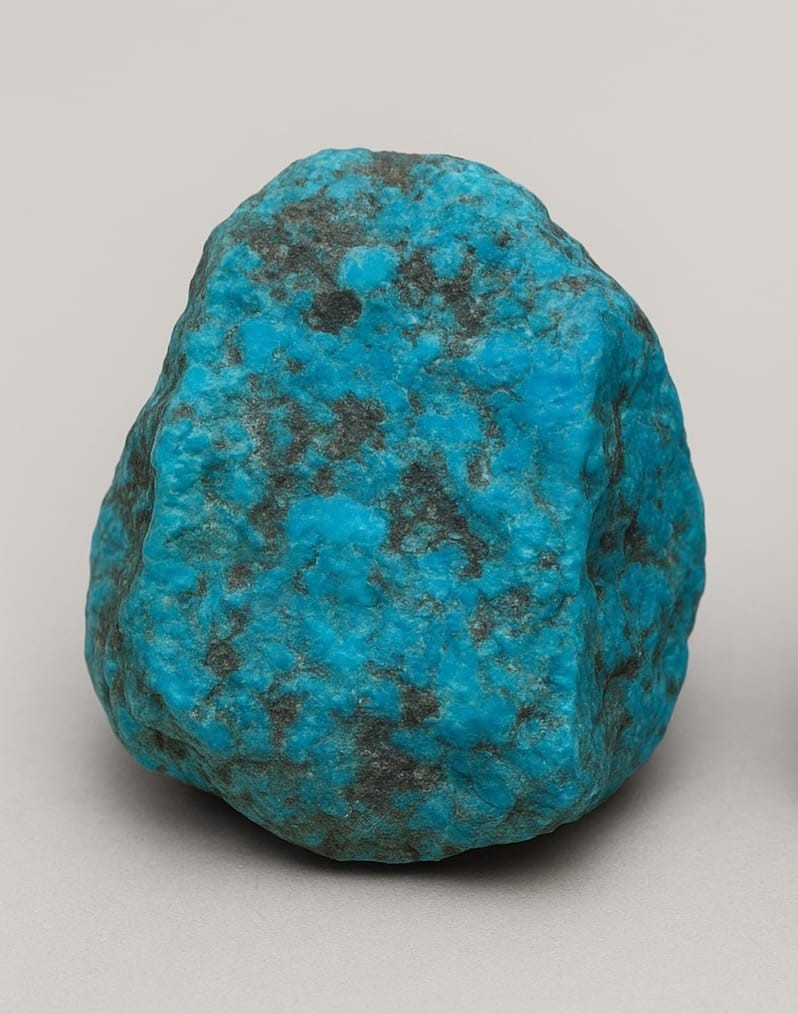
One of the most visually striking minerals associated with the copper deposits of Feynan is malachite, a beautiful green copper carbonate mineral. Its chemical formula is Cu₂CO₃(OH)₂, and its characteristic green color has made it one of the most recognizable copper minerals.
The malachite found in the Feynan region is closely associated with the area's ancient copper deposits. Its green color results from the presence of copper and from the mineral's chemical structure.
For centuries, people have been fascinated by malachite because of its distinctive color and patterns. When polished, the mineral can display beautiful shades of green ranging from light green to deep green, sometimes forming concentric bands and other natural patterns.
This makes Feynan malachite not only a geological specimen but also a material of cultural and historical interest.
Feynan is one of the most important ancient copper-mining regions in the southern Levant. Evidence of ancient mining and copper production demonstrates the importance of the area to early human societies.
The landscape of Feynan preserves a remarkable connection between geology and human history. The copper-bearing rocks provided the raw material, while ancient communities developed methods for extracting and processing copper.
Malachite is particularly interesting in this context because it is itself a copper mineral and can occur as an oxidation product in copper deposits.
It has a long history of human use. Ancient civilizations valued the mineral for its striking green color. In ancient Egypt, powdered green minerals, including malachite, were used in cosmetic and decorative applications.
Its intense color also made malachite attractive as a pigment and ornamental material.
The history of malachite therefore extends beyond mineralogy. It represents an intersection between geology, archaeology, art, and ancient technology.
The Feynan region demonstrates how a geological resource can become part of the cultural history of a country. The copper minerals of the region are evidence of geological processes, while the ancient mines and smelting remains provide evidence of human activity over thousands of years.
For this reason, Feynan malachite deserves attention not only as a mineral specimen but also as part of Jordan's geological heritage.
The specimen documented in this article represents one example of the remarkable mineral wealth preserved in Jordan. Its green color immediately identifies it as a member of the malachite family, while its association with the ancient copper district of Feynan gives it additional scientific and historical significance.
My research over many years has focused on documenting Jordan's natural history and geological heritage. I believe that minerals, fossils, rocks, and other geological specimens should be documented carefully because each specimen can provide information about the geological history of the region.
Feynan is particularly important because it brings together geology and human history in one landscape: copper-bearing rocks, ancient mines, archaeological remains, and minerals such as malachite.
The study and documentation of these materials can help future generations understand the natural resources that shaped the history of Jordan.
Feynan's green malachite is therefore more than a beautiful stone. It is a piece of Jordan's geological story and a reminder of the long relationship between the people of this land and its mineral resources.
The pucture is Feynan Stone.
NEWS RELATED TO
On a Cabinet Reshuffle Without a Reason
Aug 10,2026 | Analysis
What a Former Interior Minister Has to Say
Aug 10,2026 | Analysis